
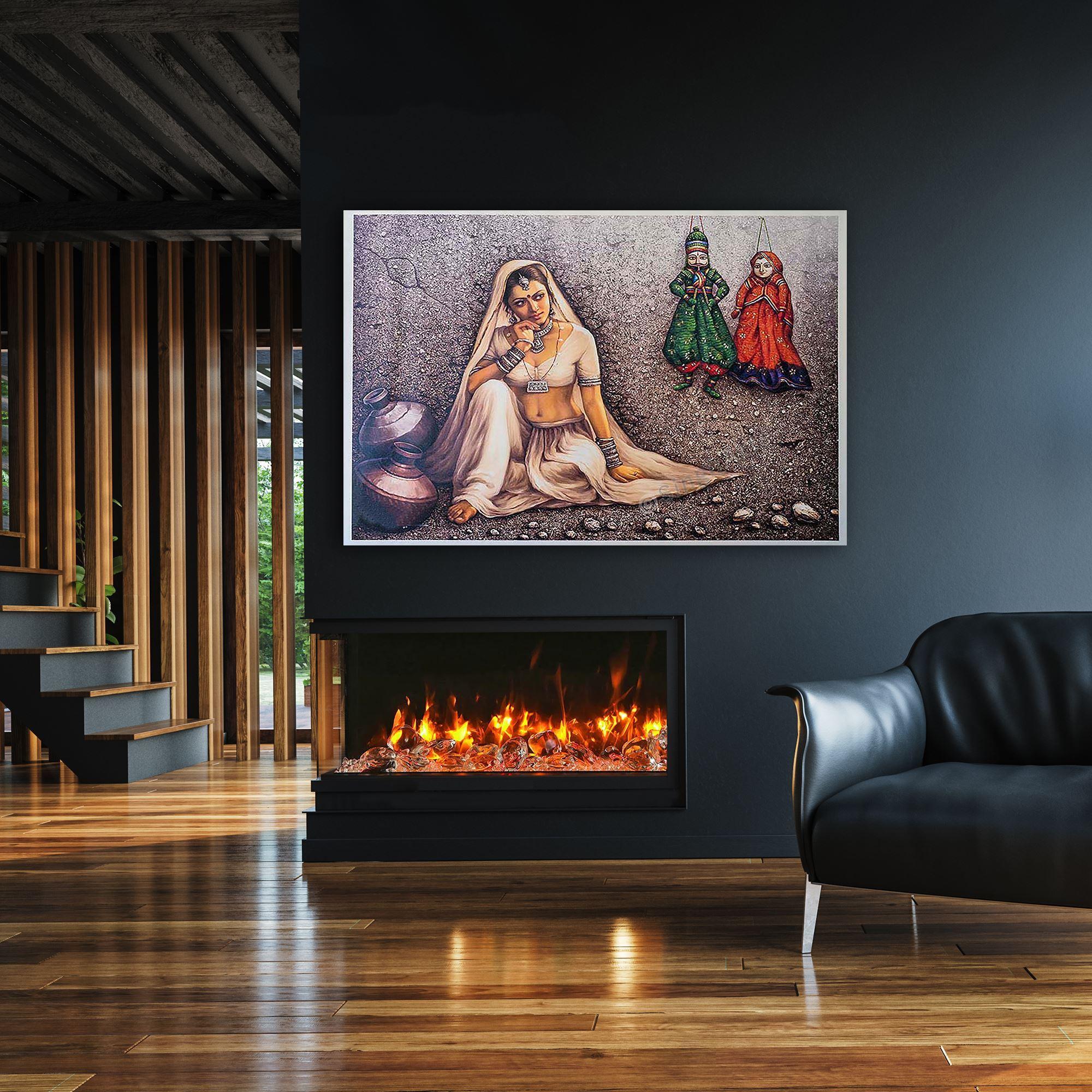
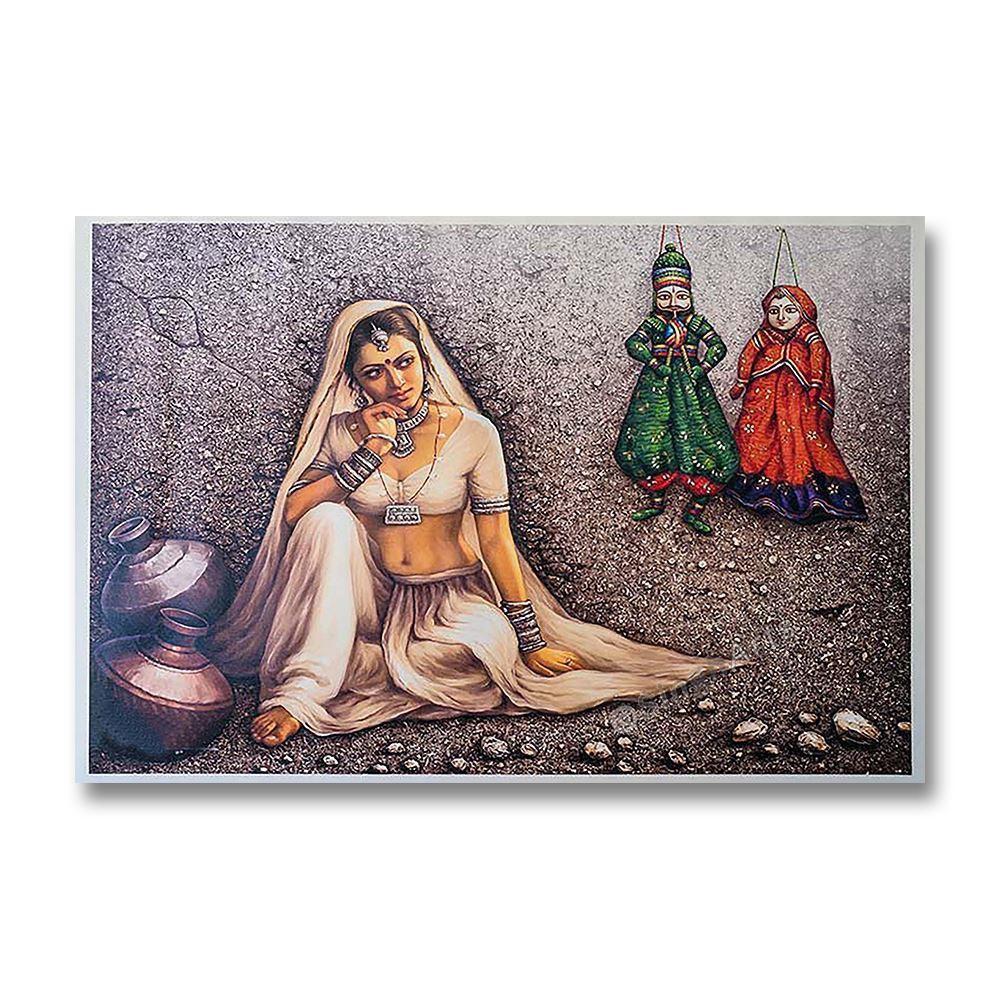
The artwork depicts a woman seated on the ground in a reflective posture, dressed in traditional attire rendered in soft, muted tones. Her body language—resting her head gently on her hand—suggests introspection, emotional weight, and stillness. Beside her lie metal water pots, simple objects of daily life that ground the scene in realism and routine, emphasizing domestic existence and lived experience.
On the wall behind her hang two Kathputli puppets, dressed in vibrant traditional costumes. These puppets, suspended by strings, immediately draw attention as symbolic elements. In Indian folk tradition, Kathputli represents storytelling, performance, and control through unseen hands. Their bright colors contrast sharply with the subdued palette of the woman’s clothing, highlighting the difference between outward performance and inner reality.
The composition creates a quiet dialogue between the human figure and the puppets. The woman appears free yet burdened, while the puppets appear animated yet controlled. This visual contrast suggests themes of societal roles, tradition, and the invisible forces that guide behavior and expectation. The rough, textured background reinforces emotional heaviness and the passage of time.
Overall, Kathputli (Puppetry) is a contemplative piece rooted in traditional Indian art and cultural symbolism. It reflects on identity, emotional restraint, and the balance between freedom and control, portraying how individuals often live between their inner voice and the roles shaped by tradition and society.



Reviews
There are no reviews yet.