
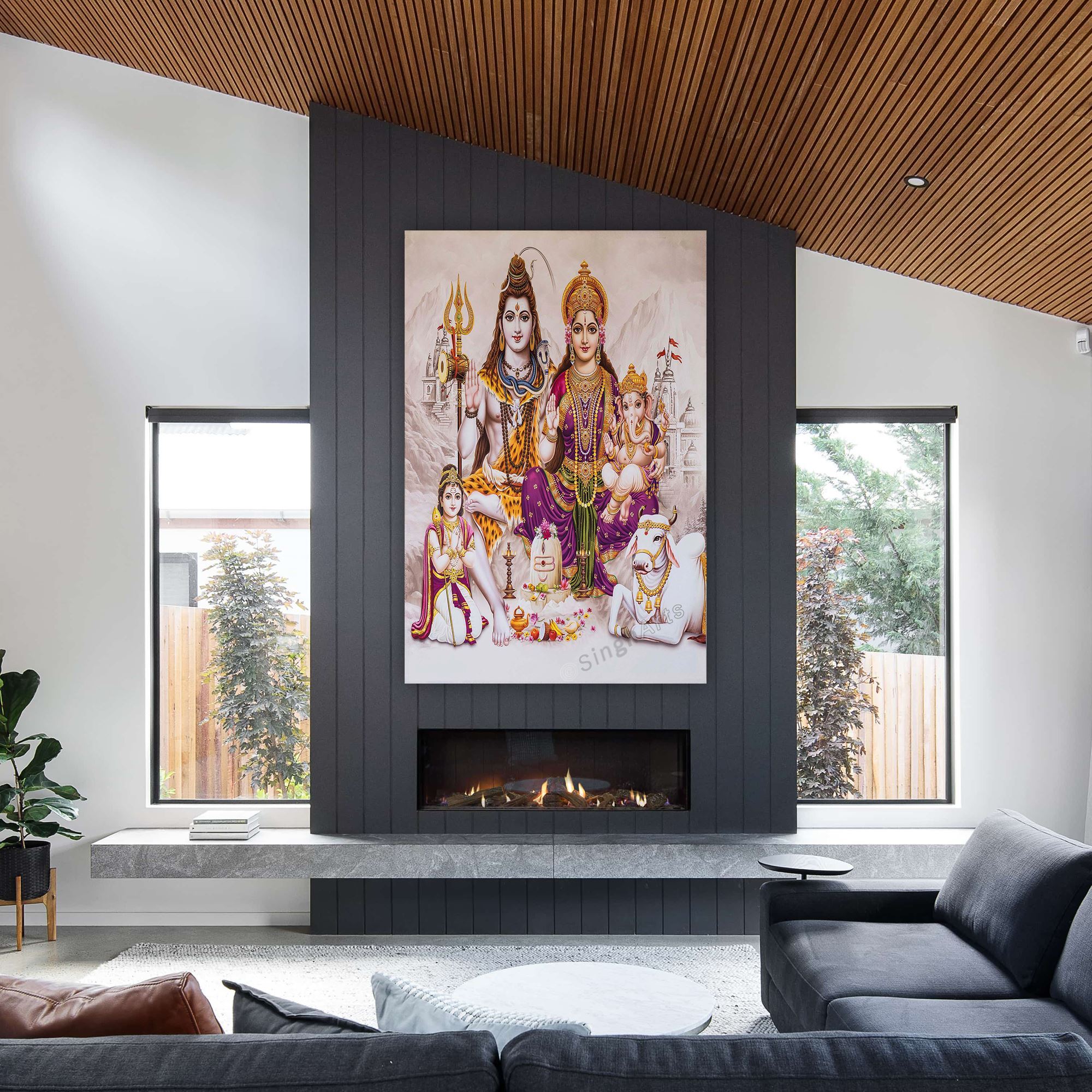
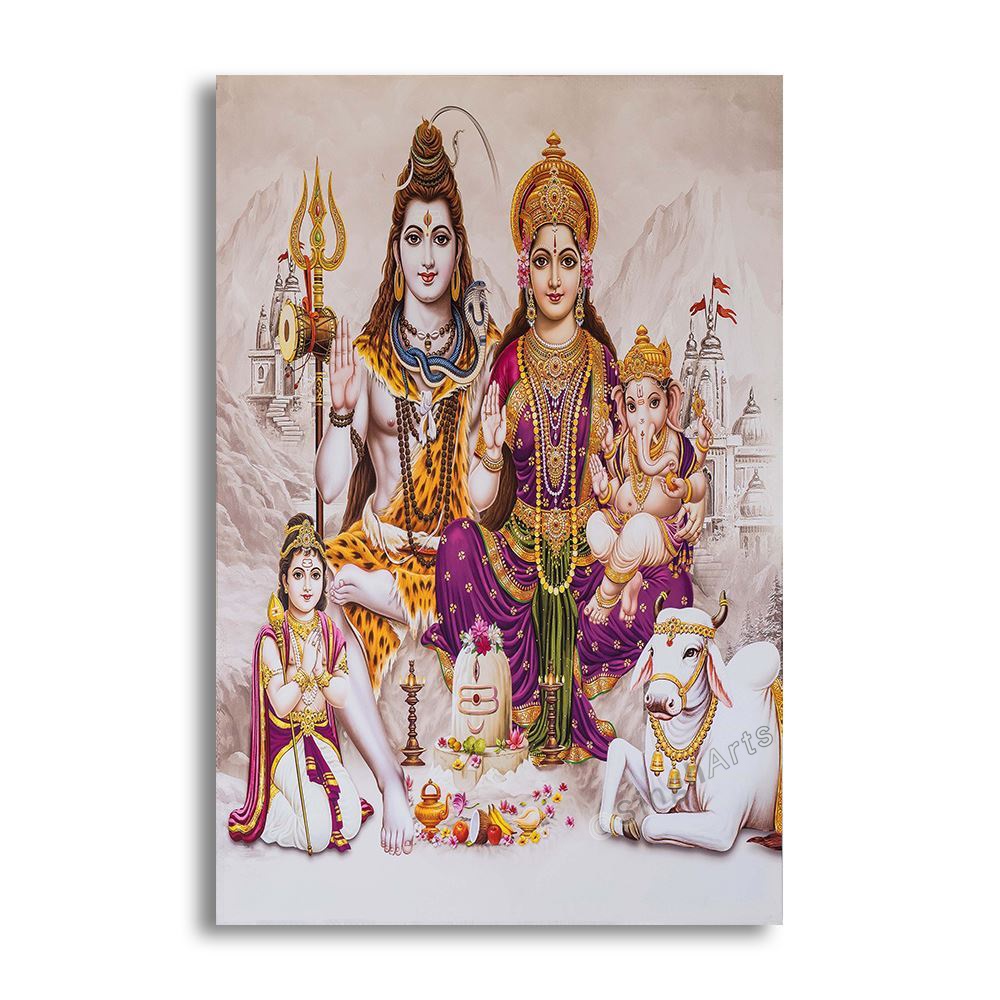
The artwork depicts Lord Shiva seated calmly with his family in a serene Himalayan setting, symbolizing stability, detachment, and cosmic balance. Shiva is shown with a composed expression, adorned with sacred ash, rudraksha beads, and the trident, representing destruction of ignorance, spiritual discipline, and supreme consciousness. His posture conveys both authority and tranquility, reflecting his role as the eternal yogi and protector of cosmic order.
Beside him sits Goddess Parvati, richly adorned and graceful, symbolizing shakti, devotion, nurturing energy, and household harmony. Her presence brings warmth and compassion to the scene, balancing Shiva’s ascetic nature. Together, they represent the union of consciousness and energy, an essential concept in Hindu philosophy.
Lord Ganesha, seated lovingly with Parvati, embodies wisdom, auspicious beginnings, and the removal of obstacles. His gentle form and calm expression signify protection and guidance for devotees. Nearby, Kartikeya (Murugan) stands in reverence, symbolizing courage, discipline, and leadership. The inclusion of Nandi, Shiva’s sacred bull, reflects devotion, loyalty, and righteousness.
The surrounding elements—mountains, temple structures, sacred objects, and offerings—create an atmosphere of purity and divine presence. The balanced composition emphasizes family, devotion, and spiritual completeness rather than grandeur alone.
Overall, Lord Shiva with Family is a devotional representation of divine togetherness in Hindu art. It conveys that even the supreme ascetic embraces family, responsibility, and love, reminding devotees that spiritual life and worldly duties can exist in harmony under divine guidance.



Reviews
There are no reviews yet.