
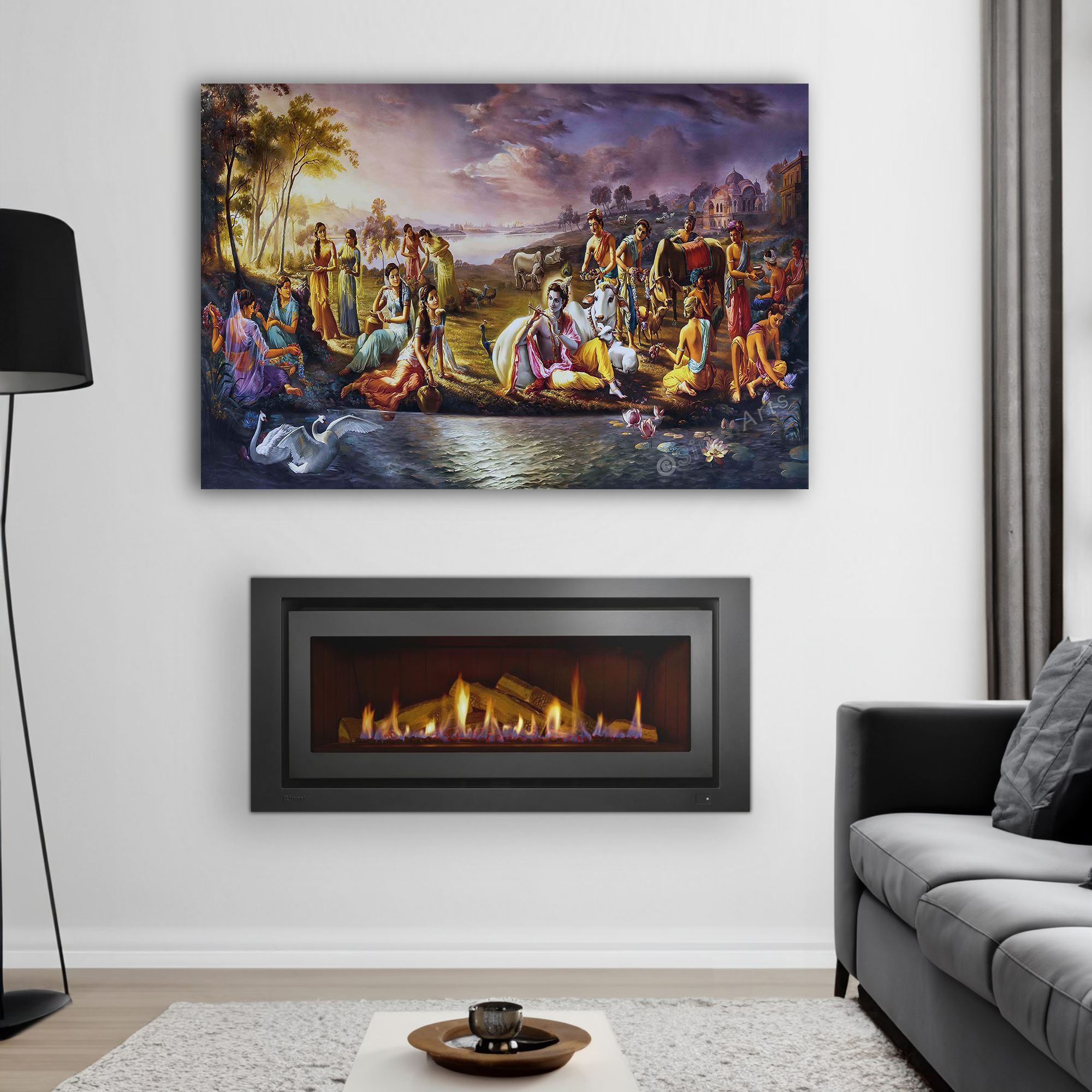
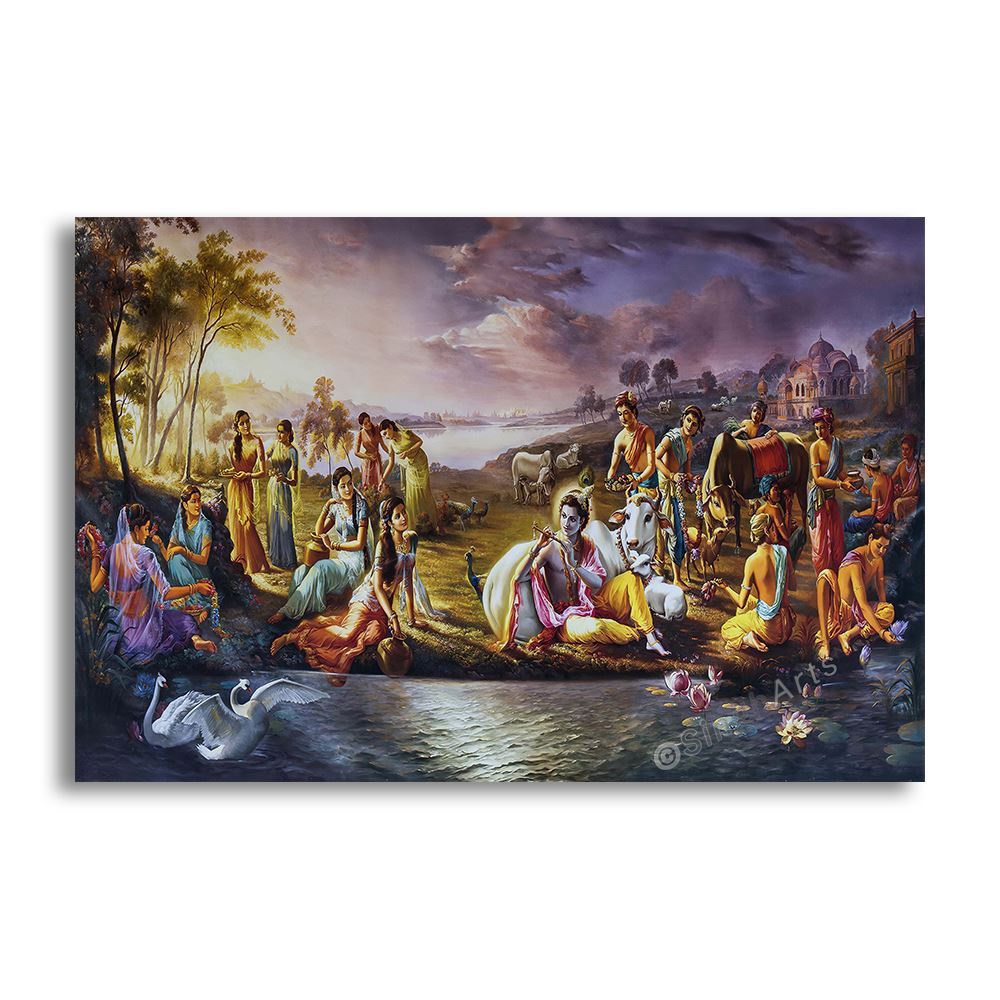
The artwork presents Lord Krishna at the heart of the Raas Leela, seated gracefully with his flute, surrounded by gopis in a serene pastoral landscape. Krishna’s calm, luminous presence draws every figure toward him, symbolizing divine attraction and the soul’s natural pull toward God. His posture and gentle expression convey compassion, playfulness, and supreme awareness, central themes in Vaishnav devotion.
The gopis are depicted in various expressive poses—listening, serving, dancing, and resting—each reflecting a different emotional state of bhakti such as love, surrender, joy, and longing. Their colorful garments and delicate gestures bring life and rhythm to the scene, emphasizing collective devotion rather than individual identity. Cows, peacocks, swans, and lotus flowers enrich the composition, symbolizing purity, grace, abundance, and harmony with nature.
The surrounding environment—flowing water, trees, distant temples, and a softly glowing sky—creates a timeless, sacred atmosphere. This setting represents Vrindavan, the spiritual realm where divine play unfolds beyond material limitations. The balance between movement and stillness in the painting reflects the inner peace found through devotion.
Overall, Raas Leela is a visual expression of divine love and spiritual bliss in Hindu tradition. It illustrates that the Raas Leela is not merely a dance, but a profound spiritual truth—where every soul is invited to participate in divine joy, unity, and eternal connection with the Supreme.



Reviews
There are no reviews yet.